Product
We Have Dedicated Ourselves To The Wonderful World Of Stone.


Product
We Have Dedicated Ourselves To The Wonderful World Of Stone.
NEWS —
Category:
Knowledge
Release Time:
2025-08-23
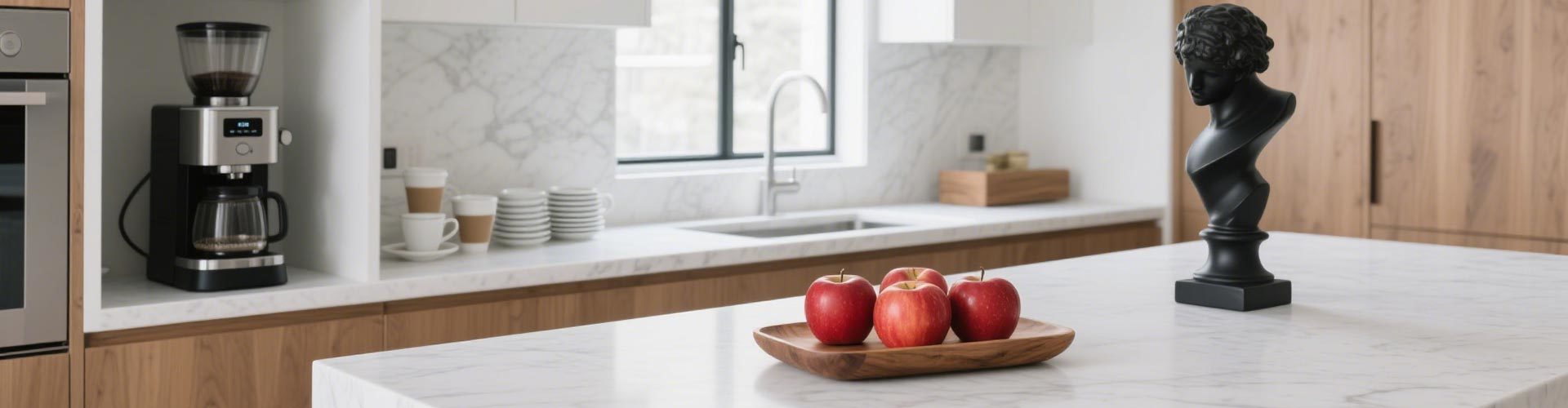
Quartzite is a natural metamorphic rock formed from sandstone. It undergoes a high-pressure and high-temperature process, resulting in a dense and durable material that is ideal for a variety of applications, particularly as kitchen countertops. Recognized for its unique aesthetics, quartzite offers a range of colors and patterns, making each slab a one-of-a-kind piece that can enhance the beauty of any kitchen.
The durability of quartzite slabs can be attributed to several key properties that set it apart from other materials:
When considering kitchen countertops, it's essential to understand how quartzite compares to other popular materials:
Both materials are renowned for their durability; however, quartzite tends to be harder than granite. Granite is porous and often requires more sealing to prevent stains. In contrast, quartzite's lower porosity offers an advantage in terms of maintenance and stain resistance.
While marble is prized for its elegance, it is softer and more susceptible to scratches and stains. It requires more care and upkeep compared to quartzite, making quartzite a more practical choice for kitchen environments.
Engineered stone countertops, often referred to as quartz, are made from a blend of crushed stone and resin. While they offer a wide range of colors and patterns, they typically cannot match the natural beauty and durability of quartzite. Quartzite remains superior in terms of heat and scratch resistance.
Despite its durability, maintaining quartzite countertops is essential for preserving their beauty:
Regular cleaning can be achieved with a damp cloth and mild soap. Avoid using harsh chemicals or abrasive cleaners, as these can damage the surface.
Although quartzite is less porous than other stones, it is recommended to seal the surface every year or two. This helps maintain its resistance to stains and enhances its longevity.
Using coasters under drinks, cutting boards for food preparation, and trivets for hot pots can significantly reduce the risk of damage.
One of the most alluring aspects of quartzite is its wide variety of colors and patterns. From subtle neutrals to bold, vibrant designs, there are numerous ways to incorporate quartzite into your kitchen:
Quartzite is available in colors ranging from soft whites and grays to deep blues and greens. This diversity allows homeowners to choose tones that complement their kitchen's aesthetic.
Unique veining and texture variations in quartzite can add depth and character to a kitchen. Whether you prefer a classic look or something more modern, there’s a quartzite option to fit your style.
Many fabricators offer custom sizing and edge profiles, allowing for a tailored fit that enhances the kitchen's overall design.
Installing quartzite countertops requires professional expertise to ensure a perfect fit:
Accurate measurement of the space is crucial. Professionals will assess the kitchen layout to determine how the slabs will fit together seamlessly.
Once measurements are taken, the quartzite slabs are precisely cut to match the dimensions of the countertop area.
Finally, the slabs are installed with precision and care. Proper sealing is applied to ensure durability and resistance to stains.
Investing in quartzite countertops can be more costly upfront than other materials. However, the long-term value is significant:
The cost of quartzite varies based on color, pattern, and slab thickness. On average, homeowners can expect to pay between $60 to $100 per square foot, including installation.
Given its durability and low maintenance needs, quartzite countertops often yield a higher return on investment, enhancing the overall value of the home.
Yes, quartzite is suitable for outdoor use due to its durability and resistance to weather elements.
Absolutely! Quartzite can be used for backsplashes, flooring, and even shower walls.
For minor stains, a mixture of baking soda and water can be applied. For tougher stains, consider seeking professional cleaning services.
While quartzite is extremely durable, it can be more expensive than other options and may require occasional sealing.
Quartzite’s strength allows it to handle heavy weight, making it an excellent choice for kitchen countertops where heavy appliances may be placed.
Quartzite slabs offer an unbeatable combination of durability, beauty, and low maintenance, making them an exceptional choice for kitchen countertops. With various design options and the ability to withstand daily wear and tear, quartzite is more than just a surface; it is an investment in your home's longevity and aesthetic appeal. Whether you are renovating your kitchen or building a new one, quartzite countertops will undoubtedly elevate your space and stand the test of time.
Key Words:
quartzite slabs for kitchen countertops
Related News
WhatsApp:+8615860724402
ADdd: Unit 1213-3, Huangda Building, Siming District, Xiamen, China
WEBSITE:www.srstonegroup.com
EMAIL:emily@srstonegroup.com


Follow Us
Copyright © SUN RISE STONE GROUP